Partner ecosystem
Strategic partnerships that support Weezie's fiber-network delivery and international reach.
Plan the system landscape around the fiber operating model: who owns each record, which identifiers cross the boundary, what moves in each direction, and how teams recover when a connection is unavailable.
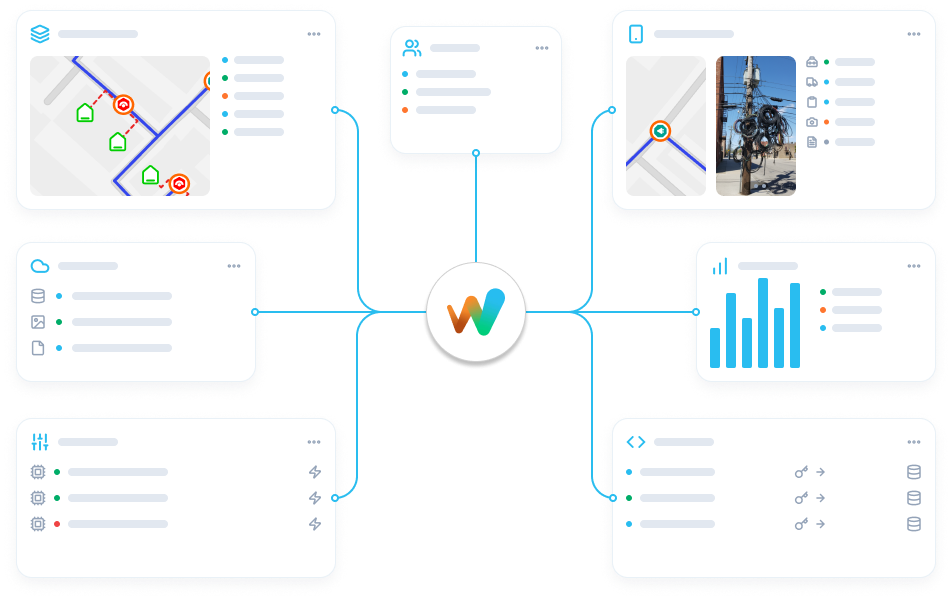
A buyer integration plan is an operating agreement, not a list of endpoints. Start with system authority and the point at which a network decision is allowed to move.
Operating handover
Customer, crew, geography, material, and service context stays with the system that owns it.
Weezie manages the approved work, field evidence, changed network objects, and review workflow.
Only accepted facts flow outward with the identifiers needed for reconciliation and operational follow-up.
Strategic partnerships that support Weezie's fiber-network delivery and international reach.













Endpoint design, authentication, event contracts, versioning, payload details, retries, and technical change management are reviewed with the implementation team—not used as buyer-facing availability claims.
Bring representative identifiers, ownership decisions, direction of travel, expected timing, and the recovery process for each integration boundary.
Keep acceptance, permissions, and evidence connected to the network objects involved, even when another system is temporarily unavailable.
Bring the current systems, object ownership, identifier mappings, expected data movement, and failure modes for a focused architecture discussion.